

Drone Strike: Gunship War
VNGGames Studios
Drone Strike: Gunship War immediately puts me in the role of someone making fast decisions from above the battlefield. Rather than asking me to run through a traditional level as a soldier, it focuses my attention on targets, timing, and the controlled chaos of an air assault. That viewpoint gives this action game a clear identity: I am not simply moving through a map looking for enemies; I am watching the fight unfold and deciding where my next strike matters most.
My first impression is that the game is built for short bursts of focused action. The idea of commanding AC130 gunships and war drones creates a strong fantasy without needing a complicated setup. I can imagine opening it when I have a few minutes, settling into the targeting role, and concentrating on the next attack rather than learning a large role-playing system. That directness is one of its biggest attractions, especially for players who enjoy military action but do not want a lengthy campaign before the shooting becomes interesting.
VNGGames Studios is the developer behind this free action title. It is rated Teen, which is a useful signal for families deciding whether it suits younger players. The game has an average rating of 4.5 from around 1.7 thousand ratings, and it has passed 100 thousand installs. Those figures suggest that it has found an audience, although I would still treat the rating as a starting point rather than proof that every player will enjoy its particular pace and viewpoint.
How the battlefield creates its own visual language
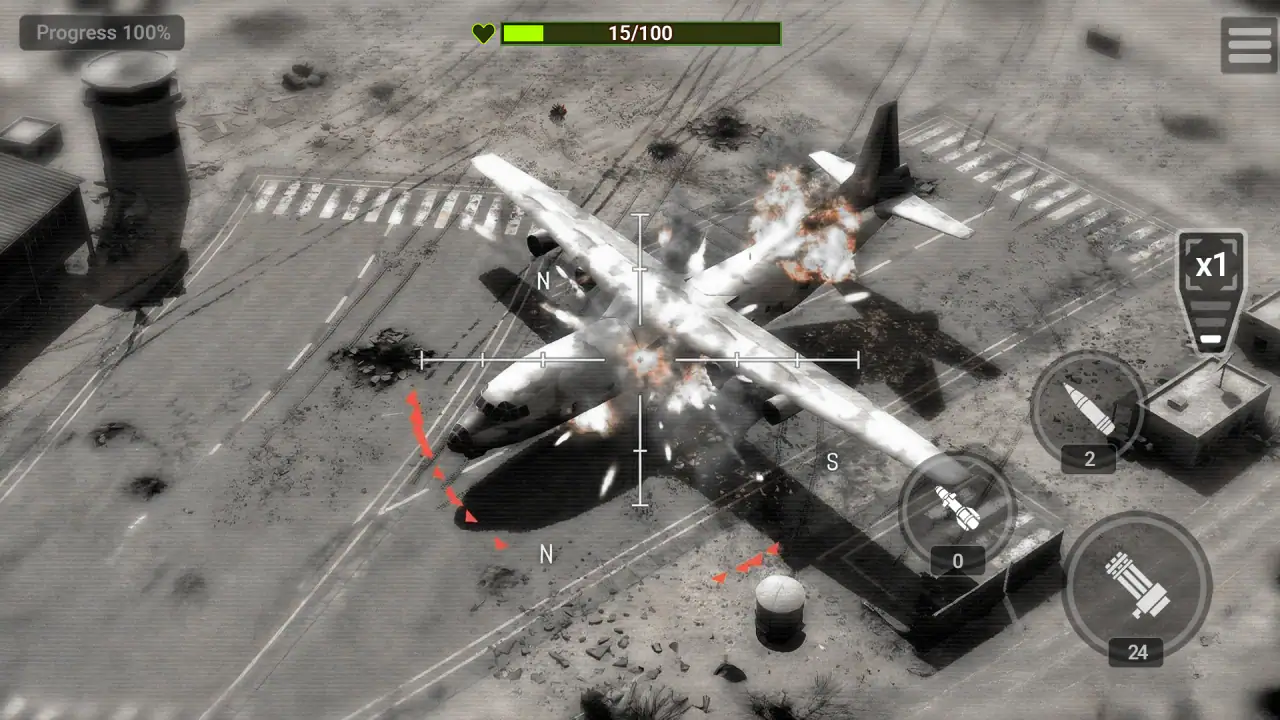
The most important artistic choice is the aerial perspective. A gunship or drone does not experience combat in the same intimate way as a character on the ground, and that distance shapes the mood. The battlefield becomes a space of movement, silhouettes, impact points, and changing priorities. I like that this viewpoint supports the central fantasy instead of distracting from it: the screen is about identifying danger and delivering force with purpose.
That approach also creates a useful contrast between control and disorder. From above, I can read the scene more clearly than a ground-level character might, but the action still feels unstable because targets, attacks, and timing compete for attention. This is where the setting earns its place. It is not just a backdrop for explosions; it frames the player as an operator trying to impose order on a situation that is constantly shifting.
Related News






The AC130 and drone theme gives the game a recognizable visual vocabulary. Heavy gunship fire implies weight and sustained pressure, while drones suggest precision, scouting, or rapid intervention. Even when I am thinking mainly about mechanics, those two ideas help separate the experience from a conventional run-and-gun shooter. The game’s identity comes from the relationship between distance and impact: I am removed from the battlefield, yet every successful decision is meant to feel powerful.
One practical consequence of this design is that visual clarity matters more than decorative detail. In a game centered on aerial targeting, I need to understand what is dangerous, what can be attacked, and where my attention should go. A crowded scene can look dramatic, but if it makes targets difficult to read, the atmosphere works against the controls. I would therefore approach each mission by first learning the visual cues, then worrying about speed. Recognizing the battlefield is more valuable than firing at everything that moves.
This is also where the game may divide players. Anyone looking for a character-driven war story, detailed exploration, or a large world to wander through may find the overhead viewpoint emotionally distant. I do not see that distance as a flaw by itself; it is part of the concept. Still, it means the game is better suited to players who enjoy tactical observation and strike timing than to people who want close-range movement and personal combat.
Gallery
Why the setting works best when I treat it as a control room
I get more from the setting when I imagine myself inside a compact control room rather than expecting a fully interactive battlefield. That mindset changes how I play. Instead of chasing visual spectacle, I watch for patterns: where threats gather, when a target becomes exposed, and whether using force immediately is wiser than waiting for a clearer opportunity.
A useful habit is to divide each encounter into three mental stages. First, I scan the scene without rushing. Next, I identify the target that can cause the most trouble or change the situation most quickly. Finally, I commit to the strike and prepare for the next threat rather than staring at the result. This simple rhythm keeps the aerial viewpoint from becoming passive. It turns observation into an active skill.
That is one of the less obvious strengths of the concept. The game can make patience feel like part of the action. In many shooters, hesitation is punished because movement is the main form of survival. Here, the fantasy encourages me to pause for a moment, read the situation, and use the viewpoint to my advantage. Players who enjoy planning under pressure may appreciate that more than those who measure fun by constant movement.
Sound, impact, and the rhythm of each strike
Sound is especially important in a gunship-focused game because the player is not physically standing beside the targets. Audio has to give weight to attacks that happen at a distance. The rumble of heavy weapons, the sharp confirmation of a successful hit, and the contrast between quiet observation and sudden impact all help bridge that gap. When the sound design supports the visual action, a strike feels like a decision with consequences rather than a simple tap on the screen.
I prefer to play this kind of experience with audio enabled, because the rhythm is not only visual. A good attack sequence should have a moment of recognition, a brief commitment, and a satisfying release. That pattern can make repeated encounters feel more purposeful. Without it, the game risks becoming a series of similar touches on a display, especially during longer sessions.
The pacing also depends on how well the game alternates tension and release. If every moment is filled with targets and explosions, nothing feels urgent for long. If the action pauses too often, the gunship fantasy loses momentum. The strongest rhythm for this concept is a controlled build-up: scan, wait for the right opportunity, strike, then immediately reassess the battlefield.
That rhythm gives me a practical way to manage attention. I would not treat every target as equally important. Instead, I would use the quieter moments to prepare my next decision and avoid wasting attention on effects that do not change the outcome. This matters on a phone, where notifications, a small screen, or an interrupted session can break concentration. The game’s aerial perspective is well matched to short sessions, but it still rewards being mentally present while playing.
Players who want nonstop speed may find the observation periods slow, while players who enjoy measured action may see them as the point. I would compare it less with a traditional mobile shooter and more with a compact strike-planning experience. The appeal is not only how quickly I can attack; it is whether I can make the attack at the right moment and keep control of the situation afterward.
Where the mechanics fit the gunship fantasy
The central mechanical fit is straightforward: the viewpoint, the military setting, and the focus on strikes all point in the same direction. I am not being asked to pretend that an aerial operator behaves like a ground infantry character. That consistency helps the game feel coherent. The controls and objectives can stay focused on targeting and pressure instead of carrying unrelated systems that would weaken the fantasy.
For a new player, I would recommend beginning with accuracy and awareness rather than trying to act quickly. Fast firing can feel impressive, but a missed strike may leave the most dangerous target untouched. I would first learn how the game communicates priority, then develop a personal order of operations. In practice, that means checking the whole scene before committing, watching for threats that can disrupt the encounter, and keeping enough attention for what appears immediately after an attack.
Another useful trade-off is deciding when to favor a broad attack and when to focus on a single target. A wide strike may feel efficient when enemies are grouped, but a concentrated attack can be more valuable if one target is creating the main danger. I would not assume that the largest visual effect is always the best move. The satisfying choice is the one that improves the next few seconds of the encounter, not merely the one that looks most explosive.
The game is free to download, which makes trying this style of action relatively easy. It includes in-app purchases ranging from $0.99 to $99.99 per item, so I would approach progression and optional spending with a clear personal limit. The important question for me would be whether the basic play loop remains enjoyable without buying anything. Since the game’s appeal rests on aiming, timing, and battlefield reading, I would only spend if a purchase genuinely improves convenience or supports continued play—not simply because a difficult moment creates pressure.
That spending range also affects who should be cautious. Players who prefer a completely fixed-cost experience may be more comfortable with a premium action game that has no purchase prompts. Likewise, anyone who dislikes military strike themes or feels uneasy about distant bombardment should skip this title, even if the mechanics sound appealing. The subject matter is not incidental; it is the foundation of the game’s atmosphere.
The current version is 1.7.0, and the game runs on Android devices using version 6.0 or later. That makes it accessible to many older compatible phones, but compatibility alone does not guarantee an ideal experience. A larger screen can make target recognition easier, while an older device may make fast visual action less comfortable. I would test it on the device I intend to use before investing time or money, particularly if I plan to play for extended sessions.
A realistic way I would use it during the day
Imagine that I am waiting for a train with ten minutes to spare. I want something more engaging than a passive puzzle, but I do not want to begin a story-heavy game that demands a long uninterrupted session. This is where the aerial strike format makes sense. I can start an encounter, focus on scanning and targeting, and stop after a natural break without needing to remember a complicated plot or explore a large map.
For that situation, I would keep the sound at a comfortable level, avoid spending impulsively, and treat each attempt as practice in reading the battlefield. If I lose, I would ask whether I fired too early, ignored a higher-priority threat, or failed to prepare for the next wave of pressure. That turns a short session into something more useful than random tapping.
On the other hand, I would not choose it for a relaxed evening when I want a deep narrative, character customization, or a social experience. I would also avoid it when I am looking for a conventional first-person shooter with direct movement and close combat. Those alternatives provide a stronger sense of physical presence. Drone Strike: Gunship War is more appealing when I want the detached authority of directing attacks from above.
Who will enjoy it, and where another game is better
I would recommend this game to players who like military action, target prioritization, and short sessions built around decisive moments. It is a good match for someone who enjoys watching a situation develop before making a move. The AC130 and drone theme gives the action a focused identity, and the Teen rating helps set expectations about its intended audience.
I would be more hesitant to recommend it to players who need a strong story to maintain interest. The game’s mood comes from its battlefield role, sound, and strike rhythm rather than from the kind of personal journey found in a campaign shooter. It may also disappoint players who want extensive exploration, close-range weapon handling, or a rich competitive layer. In those cases, a conventional action shooter or a story-led military game would probably be a better choice.
Compared with the usual mobile action alternatives, its advantage is specialization. Many shooters try to combine running, aiming, collecting, upgrading, and narrative progression. This title has a clearer fantasy: observe from above and deliver force. That focus can make it easier to understand and satisfying to revisit, but it can also make the experience feel narrower. The same design decision that gives it personality may limit its long-term variety for players who need constant new systems.
My best advice is to judge it by the quality of its decisions, not by the number of visual effects on screen. If I am enjoying the process of selecting targets, waiting for a useful opening, and adapting after each strike, the game is doing what it should. If I am only tapping because the explosions look impressive, the novelty may wear off quickly.
I would also keep sessions short at first. That is not because the action lacks value, but because the aerial perspective depends on concentration. Playing in brief blocks helps me notice whether I genuinely enjoy the loop or whether I am simply reacting to spectacle. It also makes the game easier to fit around everyday interruptions, which is one of its practical strengths.
My verdict on the atmosphere and the action
Drone Strike: Gunship War works best when its art direction, sound, setting, and pacing are treated as parts of one idea. The overhead battlefield establishes distance, the gunship and drone theme gives that distance purpose, and the strike rhythm turns observation into action. I appreciate that the game does not need to imitate a ground shooter to feel active. Its identity comes from controlled pressure and the responsibility of choosing where to aim.
My main reservation is that this focused design will not satisfy everyone. Players seeking a broad campaign, intimate combat, or a fixed-price experience may be happier elsewhere. The in-app purchase range also means I would play with spending boundaries from the beginning. For me, those are manageable limitations because the core appeal is clear and easy to test without paying upfront.
After spending time with the concept, I see it as a good pick for short, attentive action sessions rather than an all-purpose shooter. It is most enjoyable when I slow down enough to read the battlefield, use sound and visual cues to build a rhythm, and treat every strike as a tactical choice. If that sounds more appealing than running through levels with a rifle in hand, I think this free action game is worth trying.
In the end, I would recommend it to a friend who wants a compact aerial-combat fantasy and enjoys making decisions under pressure. I would tell that friend not to expect a full military simulation or a sprawling adventure. Instead, expect a focused game about the mood of the control room: distant targets, sudden force, and the satisfaction of turning a chaotic scene into a manageable sequence of choices.
FAQs for Drone Strike: Gunship War
What is Drone Strike: Gunship War about?
Drone Strike: Gunship War is an action-focused mobile game centered on aerial combat and military missions. Players control armed drones or gunships, complete attack objectives, eliminate enemy targets, and work through increasingly difficult stages. The game is designed for users who enjoy quick missions, shooting mechanics, explosions, and upgrade-based progression rather than a realistic flight simulator experience.
Is Drone Strike: Gunship War free to download and play?
The game can generally be downloaded and played without an initial purchase, allowing users to try its missions and combat systems at no cost. However, free-to-play games may include optional in-app purchases, advertising, or both. These can be used to obtain upgrades, currency, extra rewards, or faster progress. It is recommended to review the store listing and purchase settings before playing.
Does Drone Strike: Gunship War require an internet connection?
Connection requirements can vary depending on the version installed and the feature being used. Basic missions may work offline on some devices, while advertisements, rewards, updates, cloud features, or other online services may require an internet connection. Players should download the latest version from an official app store and test the game in both online and offline conditions before relying on it without mobile data.
Is the game suitable for children?
Drone Strike: Gunship War contains military combat, shooting, explosions, and destruction of enemy targets, so it may not be appropriate for younger children. Parents should check the age rating, content descriptors, advertising practices, and in-app purchase options shown on the relevant Android or iOS store. If children use the device, parental controls and purchase restrictions are advisable.
What devices are needed to play Drone Strike: Gunship War smoothly?
The game should run on many modern Android and iOS devices, but performance can differ according to the phone or tablet’s processor, memory, operating-system version, and available storage. Older devices may experience slower loading, reduced visual quality, or occasional frame-rate issues during busy battles. Before downloading, check the official store requirements and keep sufficient free space for the installation and future updates.
Pros
- Intuitive controls make aiming and firing easy for new players.
- Short missions suit quick gaming sessions on mobile devices.
- Varied gunship weapons add flexibility during combat.
- Offline play is useful when you have no internet connection.
- Mission rewards provide a steady sense of progression.
Cons
- Repeated objectives can make later missions feel predictable.
- Aircraft movement may feel less responsive on smaller screens.
- Some upgrades require considerable grinding to unlock.
- Visual details can look dated on newer phones.
- Ads may interrupt the experience between missions.


